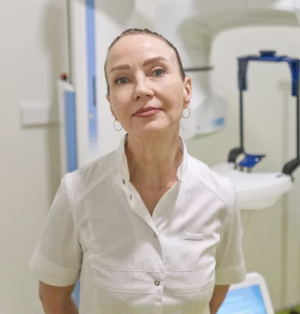
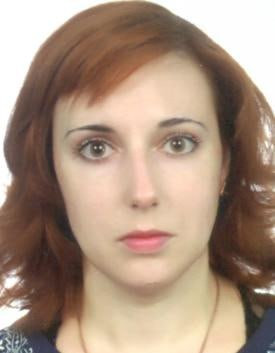
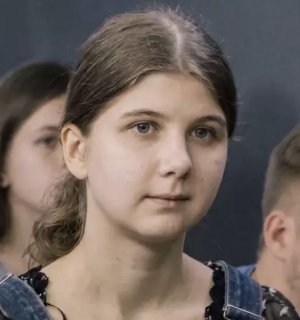
Zhanna has worked in medicine her entire life. In 1987, she graduated from Minsk Medical School No. 2, training to become a paramedic. She then completed retraining as an X-ray technician, specializing in dentistry.
Zhanna Yaskuld worked at the capital's medical center "Dimeda".
Trial outcome date unknown
unknown years of imprisonment in colony under general regime conditions.
Appeal date unknown
unknown.
After the sentence comes into effect, it is only possible to write letters to a prisoner. According to article 85 of the Penal Enforcement Code, prisoners cannot receive money transfers from persons who are not family members. Parcels are also only possible from relatives. If you want to help, help families directly, if this option is available on the prisoner's card.
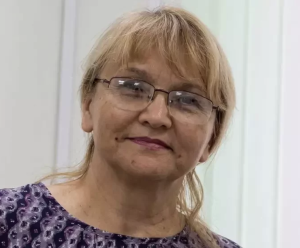
Galina Ustyugova headed the land management department of the Beshenkovichi District Executive Committee for many years and was awarded a Certificate of Honor. She also served as a member of the 28th (previous) Beshenkovichi District Council representing the Sinitsky District and served on the committee on agro-industrial complex and ecology.
In recent years, she worked as a survey specialist in the district statistics department. The last public mention of her was found in August 2025.
Ustyugova's public profile on VKontakte indicates that she is Catholic. On her page, she occasionally shared broadcasts of Catholic services and church news.
Trial outcome date unknown
unknown years of imprisonment in colony under general regime conditions.
After the sentence comes into effect, it is only possible to write letters to a prisoner. According to article 85 of the Penal Enforcement Code, prisoners cannot receive money transfers from persons who are not family members. Parcels are also only possible from relatives. If you want to help, help families directly, if this option is available on the prisoner's card.
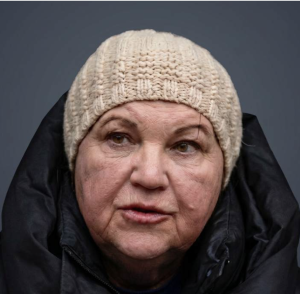
Tatyana previously worked as a special education teacher in a kindergarten.
Some of her social networks have already been deleted , one page is practically empty.
Trial outcome date unknown
unknown years of imprisonment in colony under general regime conditions.
After the sentence comes into effect, it is only possible to write letters to a prisoner. According to article 85 of the Penal Enforcement Code, prisoners cannot receive money transfers from persons who are not family members. Parcels are also only possible from relatives. If you want to help, help families directly, if this option is available on the prisoner's card.
Maria entered the French language department of the Minsk State Linguistic University and received her diploma in 2014.
The young woman has always had a strong civic stance . Even during the protests against integration with Russia in 2019, she said, "It's very easy to lose independence, but it will be impossible to win it back. It's bad that only a few people came out, but it's the few who save the world, not the masses."
In July 2020, Maria attended Svetlana Tikhanovskaya's election rally in Zhlobin with a poster to protest "elections without choice."
She said she did not support any of the candidates, but demanded that opposition politicians clearly condemn the conflict in Ukraine and the occupation of Crimea.
Outside of her studies and work, Maria has always been passionate about nature: she loves birds and, whenever possible, is involved in rescuing animals.
Trial outcome date unknown
unknown years restrictions of freedom with referral to an open-type correctional facility.
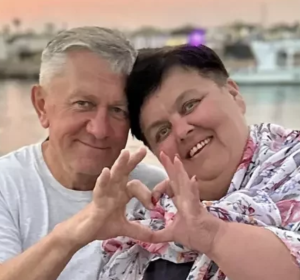
Oksana Volvacheva was born in Vinnytsia, Ukraine, but has lived in Belarus for over 30 years.
Since the beginning of 2019, the woman has been registered as an individual entrepreneur, and her main activity was the retail sale of sausages and ham in specialized stores in Minsk. Her business is currently in the process of being liquidated.
Oksana is an active civic activist and has frequently participated in political Telegram chats, especially after the outbreak of full-scale war in Ukraine in 2022. Publicly available data indicates that security forces persecuted her specifically for her online comments. The Minsk resident was first detained in January 2024 for these comments.
Trial outcome date unknown
unknown years of imprisonment in colony under general regime conditions.
After the sentence comes into effect, it is only possible to write letters to a prisoner. According to article 85 of the Penal Enforcement Code, prisoners cannot receive money transfers from persons who are not family members. Parcels are also only possible from relatives. If you want to help, help families directly, if this option is available on the prisoner's card.
Tatyana worked for many years as a teacher at Kindergarten No. 518 in Minsk's Sokol neighborhood. She also worked with children from an inclusive group, including those with autism. Her husband, 56-year-old Dmitry, works in renovations and worked as a laborer at the same kindergarten.
The Korsakovs' home was raided in the evening and searched. Security forces also called Pelageya, Dmitry and Tatyana's daughter, who now lives in Ukraine, and forced Dmitry Korsakov to tell her that her mother was in the hospital. This later turned out to be untrue. They most likely pressured the young woman to return to Belarus. Until 2020, the Korsakovs' daughter, Pelageya, worked at the same kindergarten #518, participated in protests, and in September 2021, she moved to Ukraine. With the outbreak of full-scale war, she decided not to leave for a safer country but to volunteer. In addition to her main job as an SMS messenger, Pelageya, for example, evacuates civilians and coordinates volunteer work in the event of missile strikes.
Tatyana and Dmitry's daughter believes that "their only 'crime' was that I was in Ukraine, and we kept in touch, calling each other. And my parents were worried about me. It turns out that this is the basis for the services' wild imagination."
Tatyana has long had problems with her blood pressure and knees. She constantly had to undergo expensive injections, and it's unclear whether she currently has access to the necessary treatment.
Trial outcome 10.06.2026
12 years of imprisonment in colony under general regime conditions, 1100 basic values fine.
Appeal 28.08.2026
the sentence was upheld.
After the sentence comes into effect, it is only possible to write letters to a prisoner. According to article 85 of the Penal Enforcement Code, prisoners cannot receive money transfers from persons who are not family members. Parcels are also only possible from relatives. If you want to help, help families directly, if this option is available on the prisoner's card.
She was convicted in the case of the "Russian Orthodox Church – Tsarist Empire" movement. On May 29, 2026, Galina was added to the "list of extremists." According to a decision of the Ministry of Internal Affairs on August 15, 2025, the religious sect "Russian Orthodox Church – Tsarist Empire" was designated an "extremist organization."
The "list of extremists" includes Anna Stryukova from the village of Ulazy in the Grodno region, Galina Frolova from the village of Kaiki in the Vitebsk region, Olga Boykovskaya from Svisloch, and Olga Vashchenko from Vileyka. The basis for the list is the Minsk City Court's verdict under Part 3 of Article 130 of the Criminal Code and Part 3 of Article 361-1 of the Criminal Code—"incitement of hatred" and participation in or leadership of an "extremist group."
The movement's participants were accused of leading the movement's structures and disseminating ideas that investigators interpreted as religious and national hatred.
The prosecutor's office announced the sentences: Stryukova, Frolova, and Baikovskaya received five years and three months in prison, and Voshchenko received five years in prison. In May 2026, the Supreme Court upheld the sentence.
Trial outcome date unknown
5 years of imprisonment in colony under general regime conditions.
Appeal date unknown
unknown.
After the sentence comes into effect, it is only possible to write letters to a prisoner. According to article 85 of the Penal Enforcement Code, prisoners cannot receive money transfers from persons who are not family members. Parcels are also only possible from relatives. If you want to help, help families directly, if this option is available on the prisoner's card.
She was convicted in the case of the "Russian Orthodox Church – Tsarist Empire" movement. On May 29, 2026, Galina was added to the "list of extremists." According to a decision of the Ministry of Internal Affairs on August 15, 2025, the religious sect "Russian Orthodox Church – Tsarist Empire" was designated an "extremist organization."
The "list of extremists" includes Anna Stryukova from the village of Ulazy in the Grodno region, Galina Frolova from the village of Kaiki in the Vitebsk region, Olga Boykovskaya from Svisloch, and Olga Vashchenko from Vileyka. The basis for the list is the Minsk City Court's verdict under Part 3 of Article 130 of the Criminal Code and Part 3 of Article 361-1 of the Criminal Code—"incitement of hatred" and participation in or leadership of an "extremist group."
According to the documents of the movement itself, Anna Stryukova appeared as "Abbess of all White Rus' (Belarus) Evdokia", and Galina Frolova as "nun Feodosia".
The movement's participants were accused of leading the movement's structures and disseminating ideas that investigators interpreted as religious and national hatred.
The prosecutor's office announced the sentences: Stryukova, Frolova, and Baikovskaya received five years and three months in prison, and Voshchenko received five years in prison. In May 2026, the Supreme Court upheld the sentence.
Trial outcome date unknown
5 years 3 months of imprisonment in colony under general regime conditions, 500 basic values fine.
Appeal date unknown
unknown.
After the sentence comes into effect, it is only possible to write letters to a prisoner. According to article 85 of the Penal Enforcement Code, prisoners cannot receive money transfers from persons who are not family members. Parcels are also only possible from relatives. If you want to help, help families directly, if this option is available on the prisoner's card.
She was convicted in the case of the "Russian Orthodox Church – Tsarist Empire" movement. On May 29, 2026, Galina was added to the "list of extremists." According to a decision of the Ministry of Internal Affairs on August 15, 2025, the religious sect "Russian Orthodox Church – Tsarist Empire" was designated an "extremist organization."
The "list of extremists" includes Anna Stryukova from the village of Ulazy in the Grodno region, Galina Frolova from the village of Kaiki in the Vitebsk region, Olga Boykovskaya from Svisloch, and Olga Vashchenko from Vileyka. The basis for the list is the Minsk City Court's verdict under Part 3 of Article 130 of the Criminal Code and Part 3 of Article 361-1 of the Criminal Code—"incitement of hatred" and participation in or leadership of an "extremist group."
According to the documents of the movement itself, Anna Stryukova appeared as "Abbess of all White Rus' (Belarus) Evdokia", and Galina Frolova as "nun Feodosia".
The movement's participants were accused of leading the movement's structures and disseminating ideas that investigators interpreted as religious and national hatred.
The prosecutor's office announced the sentences: Stryukova, Frolova, and Baikovskaya received five years and three months in prison, and Voshchenko received five years in prison. In May 2026, the Supreme Court upheld the sentence.
Trial outcome date unknown
5 years 3 months of imprisonment in colony under general regime conditions.
Appeal date unknown
unknown.
After the sentence comes into effect, it is only possible to write letters to a prisoner. According to article 85 of the Penal Enforcement Code, prisoners cannot receive money transfers from persons who are not family members. Parcels are also only possible from relatives. If you want to help, help families directly, if this option is available on the prisoner's card.
She was convicted in the case of the "Russian Orthodox Church – Tsarist Empire" movement. On May 29, 2026, Galina was added to the "list of extremists." According to a decision of the Ministry of Internal Affairs on August 15, 2025, the religious sect "Russian Orthodox Church – Tsarist Empire" was designated an "extremist organization."
The "list of extremists" includes Anna Stryukova from the village of Ulazy in the Grodno region, Galina Frolova from the village of Kaiki in the Vitebsk region, Olga Boykovskaya from Svisloch, and Olga Vashchenko from Vileyka. The basis for the list is the Minsk City Court's verdict under Part 3 of Article 130 of the Criminal Code and Part 3 of Article 361-1 of the Criminal Code—"incitement of hatred" and participation in or leadership of an "extremist group."
According to the documents of the movement itself, Anna Stryukova appeared as "Abbess of all White Rus' (Belarus) Evdokia", and Galina Frolova as "nun Feodosia".
The movement's participants were accused of leading the movement's structures and disseminating ideas that investigators interpreted as religious and national hatred.
The prosecutor's office announced the sentences: Stryukova, Frolova, and Baikovskaya received five years and three months in prison, and Voshchenko received five years in prison. In May 2026, the Supreme Court upheld the sentence.
Trial outcome 20.02.2026
5 years 3 months of imprisonment in colony under general regime conditions, 500 basic values fine.
Appeal date unknown
unknown.
After the sentence comes into effect, it is only possible to write letters to a prisoner. According to article 85 of the Penal Enforcement Code, prisoners cannot receive money transfers from persons who are not family members. Parcels are also only possible from relatives. If you want to help, help families directly, if this option is available on the prisoner's card.
9 years of imprisonment in colony under general regime conditions.
After the sentence comes into effect, it is only possible to write letters to a prisoner. According to article 85 of the Penal Enforcement Code, prisoners cannot receive money transfers from persons who are not family members. Parcels are also only possible from relatives. If you want to help, help families directly, if this option is available on the prisoner's card.
To ensure that none of political prisoners are left without attention and support the site has a function of verified sendings.
Please attach a photo or a screenshot for transfer verification. The new transfer will be posted on the site as soon as it is verified by the moderator!
Support actions
You can upload an image from the support event, and after passing moderation we will publish it.
Respond to help those released
Do you want to help a released political prisoner? Send your contact to Telegram and we will contact you.
A Keeper means you want to regularly help a specific person in prison through their family. Choose a political prisoner and click «Become a Keeper», our team will contact you shortly.
You can request the letters that we have in storage, for this, leave your telegram account for feedback, we will contact you and, after verifying your identity, we will transfer the archive with your letters.
Are you a relative or someone close to a political prisoner? Send us a short description and your Telegram contact for feedback. After data verification we will publish your relative on the website.
Do you have information about administrative prosecution? Please send us a short description and your Telegram contact for feedback. After checking the data, we will publish your information on the site.
Please leave your contact on Telegram and describe your skills in as much detail as possible. After moderation, your CV will be published on the website.
Multi upload allows you to send confirmations with one photo to several political prisoners at once, check the selected people before sending!
Please attach a photo or a screenshot for transfer verification. The new transfer will be posted on the site as soon as it is verified by the moderator!
Write to representatives
Correct translation
Application for assistance in employment or retraining
Please complete the questionnaire to enter the first stage of an interview to determine your individual needs.