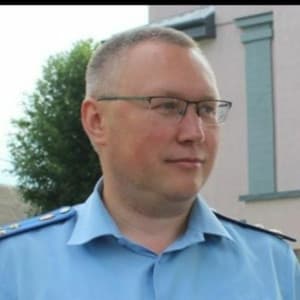
Andrey Antonovich Klyshevich
Ordered that the data of all those studying Polish be transferred to the prosecutor's office. The authorities' interest in the personal data of visitors to Polish language courses is linked to the arrest of the head of the unofficial Union of Poles in Belarus, Anzhelika Borys. Borys was arrested after the Brest prosecutor's office opened a criminal case on the fact of "glorification of war criminals" Personally initiates the initiation of criminal and administrative cases against activists. Exerts psychological pressure on opponents of the Lukashenko regime. Acts as a state prosecutor at court hearings on politically motivated cases. Signs orders for searches. After court hearings, collects lists of those who were present for the purpose of subsequent prosecution. He acted as the state prosecutor in the case of Yevgeny Shulyuk, who was accused of committing a crime under Part 1 of Article 367. The man was accused of posting an image of Lukashenko found on the Internet on his Odnoklassniki page with inscriptions containing the words "insidious", "greedy", "cockroach", "liar" and others. Klyshev demanded that the accused be recognized as a repeat offender, since Yevgeny has an outstanding conviction under Article 205 of the Criminal Code, as well as administrative offenses in the past, and requested 3 years of restricted freedom for Shulyuk with referral to an open-type correctional facility. The court sentenced Yevgeny to 2.5 years of restricted freedom with referral to an open-type correctional facility. He acted as the state prosecutor in the case of Dmitry Grinevich, who was accused of desecrating the red-green flag under Article 370 of the Criminal Code. According to the case materials presented in court, Grinevich's guilt consisted of the fact that on the night of October 28, he took down the national flag that was hung on the roof of Smorgon Gymnasium No. 4, carefully folded it and put it in his pocket, and hung a white-red-white one in its place. The desecration consisted of a one-and-a-half-centimeter tear in the fabric that was found on the canvas. On this basis, the investigation decided that the flag had been torn down and desecrated. Klyshevich demanded a year of house arrest for Grinevich - the maximum term of restriction of freedom provided for by the article. Dmitry was sentenced to 1 year of restriction of freedom without being sent to an open-type correctional facility.
List of repressed
- Associations
- Parents of minors
Evgeny was convicted of posting an image of Lukashenko found online on his Odnoklassniki page, along with captions containing the words "insidious," "greedy," "cockroach," "deceiver," and others.
According to human rights activists, he was released in the fall of 2024, having fully served his sentence.
Inessa was convicted on charges of distributing leaflets in the city by posting them, which contained “knowingly false” information that slandered police officers.
Ilya was convicted in January 2021 for a comment left on the social network VKontakte addressed to Lukashenko.
Ruslan was convicted on charges of distributing leaflets in the city by posting them, which contained “knowingly false” information that slandered police officers.
He was released in May 2023 under an amnesty, three weeks before the end of his sentence.
- Associations
- Journalists
- Entrepreneurs
Romuald, a private entrepreneur and former owner and editor-in-chief of Novaya Gazeta, was convicted of posting in comments on VKontakte a photograph with stickers containing the personal data of seven police officers involved in illegal detentions and perjury in court.
He was released in May 2023 under an amnesty. However, both before and after his trial, Romuald was persecuted - he was repeatedly tried under administrative articles such as "organizing and holding unauthorized mass events" and "distributing extremist materials."