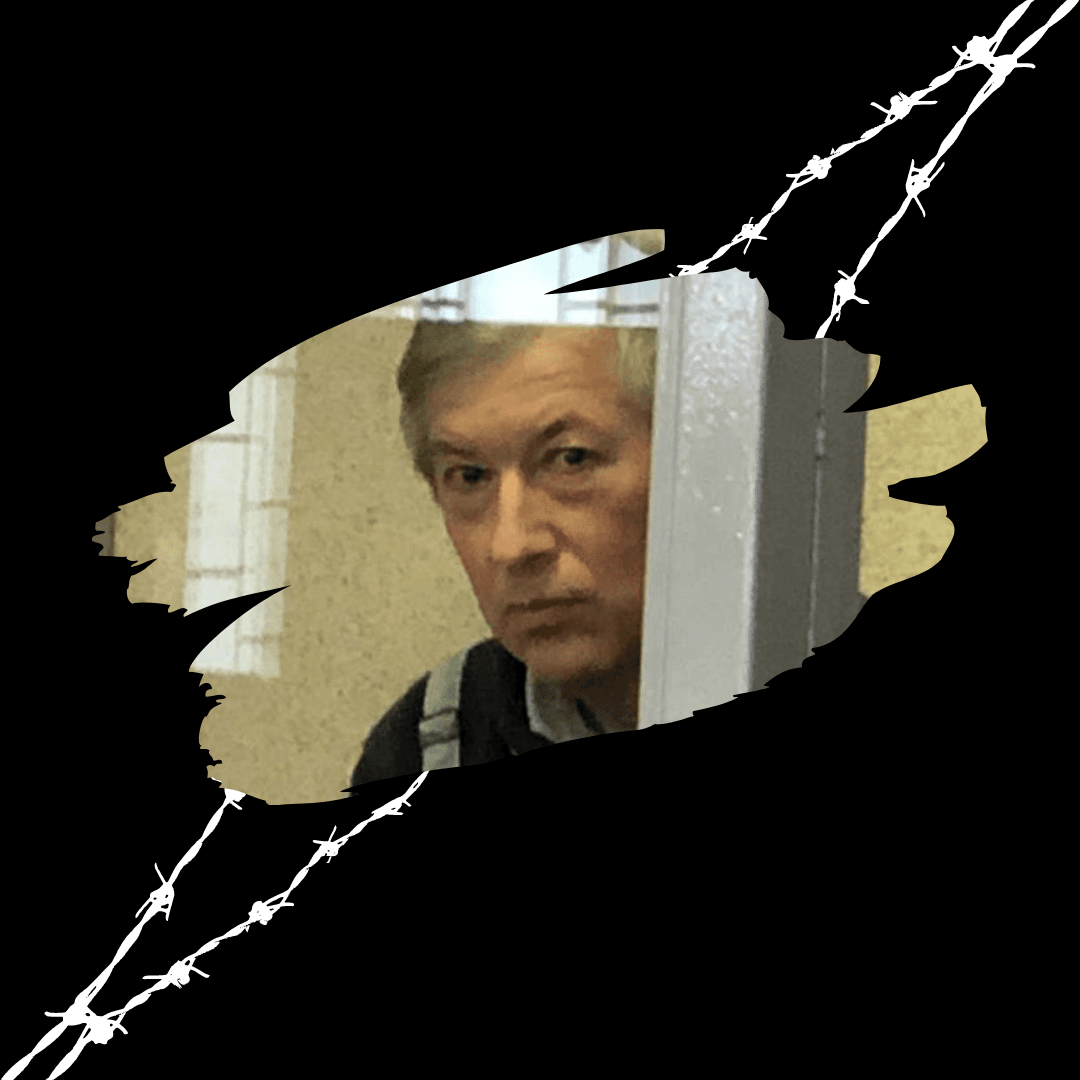
Igor Kopanaiko is a resident of Belarus and a retired military officer. He was sentenced to 1.5 years in prison for filling the front door of a female police officer's flat with construction foam and writing a phrase addressed to her on her mailbox after the killing of Raman Bandarenka.
Arrest
27 November 2020. The doorbell rings. My wife opens the door; she was getting ready for work while I was still asleep. Four men in plain clothes come in: “We're from the police.” They show no documents whatsoever:
- Does I.I. Kopanaiko live here?
- What's this about? - I'm already up and demanding to see their documents.
Two of them reluctantly flash their IDs. I wanted to have some tea - they wouldn't let me. They only let me wash. At that moment my wife, her mother and I were in the flat. Out of respect for my mother-in-law I didn't resist, because I saw her face and the state she was in (the old lady was 79 at the time).
I was taken to the Frunzensky District Police Department in Minsk. I refused to testify without a lawyer. They offered me a polygraph test. I agreed. I was curious how it all works, since I'd read so much about it. It was all mundane and simple. A laptop, sensors on the body, an operator, questions – answers. About 30-40 minutes for the whole thing. Then they brought me back to the Frunzensky District Police Department in Minsk. Here's an interesting moment: I'm sitting in the detectives' office waiting for my lawyer when a man in plain clothes walks in and sits down opposite me:
- Hey, sit properly! - he orders. I'm sitting on the chair with my legs crossed. Frantic thoughts: “What should I do?”. And right away he says to me:
- Well, you old idiot, made a mess of things, didn't you? - it was a psychological attack, an attempt to break me quickly and at once.
But realising that the blitzkrieg had failed, he started talking to me in a calm tone. He offered to record a video with me in which I would confess to what I had done and repent. I refused. We talked for about 20 minutes. I had the feeling he was secretly recording our conversation on a voice recorder. It was interesting to listen to and watch him start answering and wriggling out of my question:
- Why has a criminal case been opened against me (over a damaged door), while there is still no case over the death of Raman Bandarenka?
Some time later my lawyer arrived. It turned out that the officer on duty had brazenly lied to her that I wasn't there. I don't think it was on his own initiative. And only when the lawyer started writing a complaint about the abduction of a person by police officers did I suddenly turn up.
We refused to testify. After that they put me in a "glass" - a small holding room where I sat until evening. They gave me no food at all. Around 6 p.m. a convoy came for me and other detainees. Initially I had been detained under Article 364 of the Criminal Code of the Republic of Belarus. When they were handcuffing me and I named the article I'd been detained under, I thought they wouldn't even get me to the Akrestsina temporary detention centre alive. They clamped the handcuffs as tight as they would go.
In the prisoner van they put me in a large "glass". It had 5 or 6 regular seats. They threw 9 of us in there. I tried to protest, but the other detainees asked me to calm down, otherwise they might start beating us with batons. The drive took 1.5 hours while they picked up detainees from other district police departments. I felt that another 20 minutes and I would have passed out from the stuffiness in that "glass"…
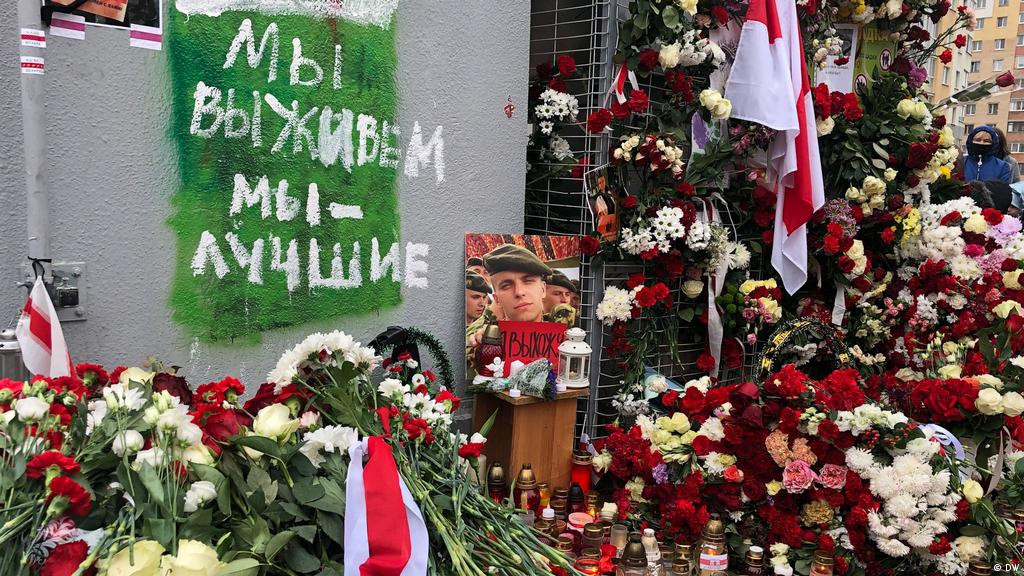
A spontaneous memorial to Raman Bandarenka in the "Square of Changes"
Meanwhile at home
While I was sitting in the office at the district police department, the detectives went back to my flat and searched it. It turned out that my phone hadn't been found either on me or during the search… They went back for a second search. Obviously without attesting witnesses. Only my mother-in-law was in the flat, and she, let me remind you, is 79 and far removed from legal subtleties. The phone can't be found, and the officers start pressuring the poor old lady. As she told us later, they threatened to turn everything upside down and start ripping up the floors and skirting boards if the phone wasn't found. Luckily my daughter came home for lunch and saw all of it. And we have a neighbour who is a lawyer. They start asking what the officers are doing and whether they have papers for a second search. The detectives realise it's time to make themselves scarce. By evening the old lady's blood pressure had risen, and the next day an ambulance took her away with heart problems. In hospital she caught covid and died at the beginning of January.
Akrestsina temporary detention centre
They gave us bedding and food. Everyone had a place to sleep. Many of the staff walked around either without shoulder boards or with them turned inside out so that their rank couldn't be seen.
Three days later my charge was requalified from Article 364 to Articles 369 ("Insulting a representative of the authorities") and 339 ("Hooliganism") of the Criminal Code. Why? They had been sure they would find something on my phone. Having no evidence, they had to change the article.
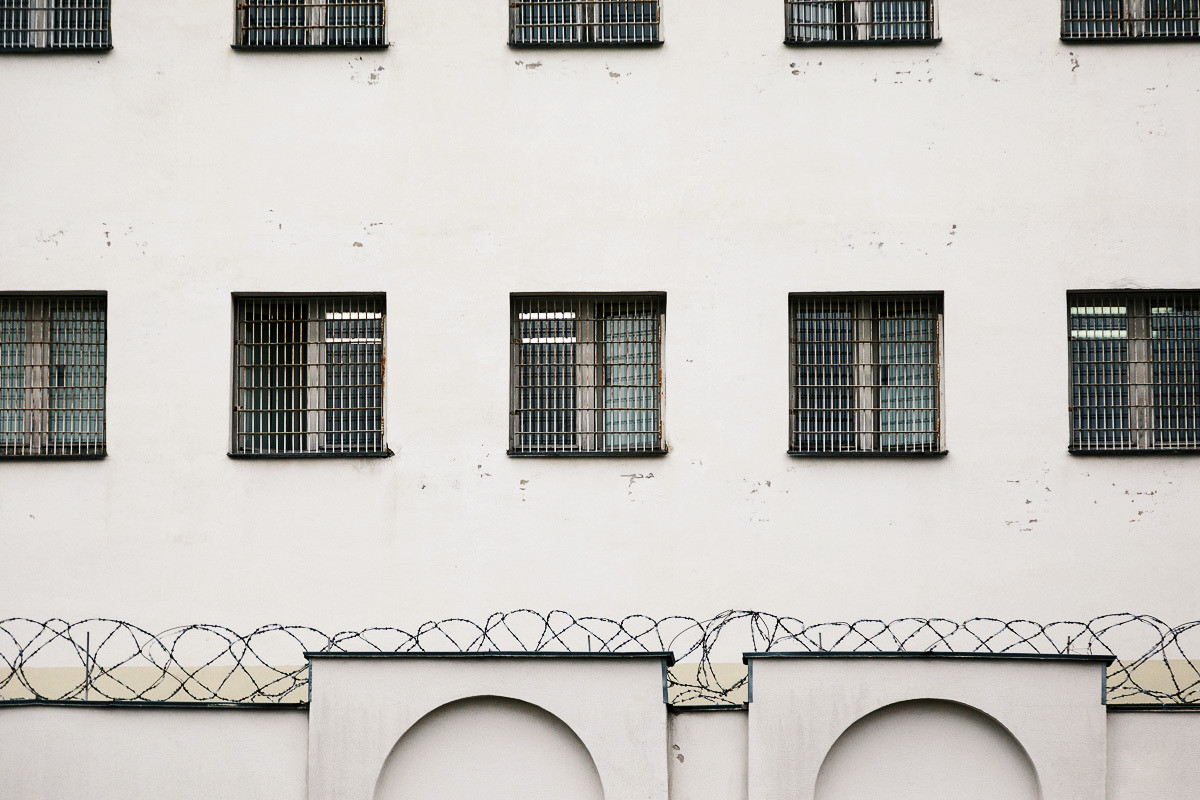
Akrestsina temporary detention centre, Minsk
Zhodzina
By prisoner van to Zhodzina. I was in Zhodzina twice: before the trial and after. Naturally, they kept moving me from cell to cell. Once again they are "keleshing" me transferring from cell to cell. I walk into the cell and introduce myself: who I am, where I'm from and what article I'm in for. I see distrustful looks. One young guy says:
- Grandpa, you're up to something.
For some reason, among the rapists there are a lot of older men like me (I'm already in my fifties). Nobody likes them, they know it and try to dodge (note: evade the question, hide the truth). The guy goes on:
- 339 - that's plain hooliganism, you're getting on in years, guys like you usually don't get locked up, you're up to something… Come on, tell us what you did!
- I foamed up the door of one bad lady, - I say.
- No way!! We saw you on TV, on “Zona X”, respect.
Zhodzina, Prison No. 8, is the centre of boorishness. That's why those who have been there call Zhodzina “Zhopino” (from "arse"). There hasn't been even the most basic repair. I was in a block everyone called the “Titanic“: everything is held together with spit. All the walls and ceilings are covered with leak stains and peeling paint. Once I asked the old-timers: “Why that name?”. They said the pipes and sewage constantly burst and everything starts leaking. Terrible mattresses and pillows - they seemed to date from the last century.
The administration's attitude towards prisoners, with rare exceptions, is arrogant and humiliating. As a rule they address everyone with the familiar "ty". I had some violation or other. Two officers, a female captain and a male senior lieutenant, called me out of the cell into a separate office to write an explanation. They say:
- Write an explanatory note.
- And who are you, what are your surnames and positions? - I ask.
- Call us "citizen chief".
- Since you don't want to introduce yourselves (back then there was a time when they were afraid to reveal their surnames), I won't write anything.
They gave me a sideways look, as if to say "cheeky one", and took me back to the cell. Once we went to the bathhouse. A guy who had just arrived asks an officer:
- How much time will you give us to wash?
- Wash as long as you like, you've got 15 minutes.
Unfortunately, this isn't humour but cynicism. Over December-January 2021 I went through several cells, and in all of them 20-25% of the people were in for political reasons. There were a great many of our kind at that time. And the greater half of them told of beatings and abuse during and after their arrest. The food is prison food - you won't starve. Medical care - there is none. If you're still breathing, you don't need it. Sometimes someone would sign up for the medical unit, and if he was taken there that day or the next, he was considered lucky…
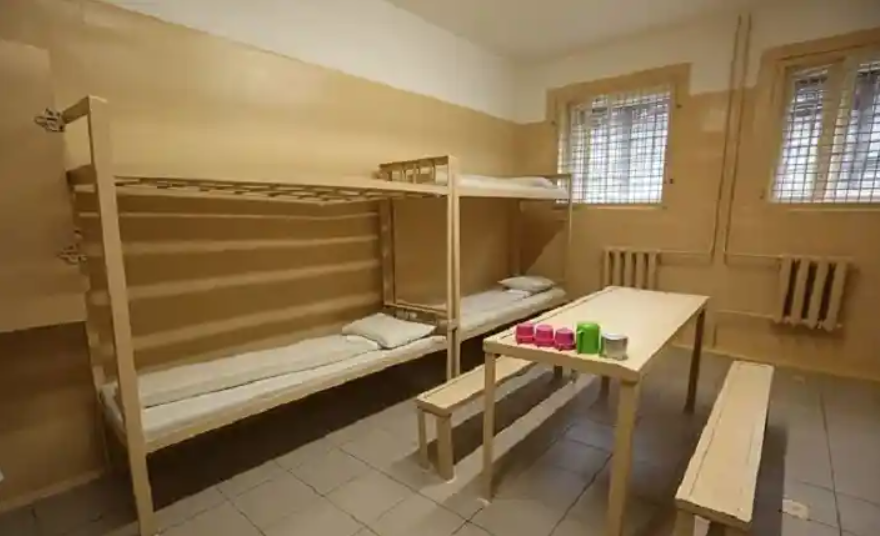
Prison No. 8, Zhodzina
Valadarka
The transfer from Zhodzina to Valadarka before the trial was the calmest of all. They put us in a prisoner van, took off the handcuffs, and that's how we rode for just over an hour.
Valadarka. I had heard a lot about it in Zhodzina. I arrived and saw that it wasn't as sweet as they'd said. The administration is much more reasonable. As a rule they use the polite "vy" and are respectful. Here in many cells even the third tier of bunks is occupied and there's much less space, but almost every cell had a TV. Here there was much more information about what was happening on the outside. Primarily because someone was always going to short visits. The food is about the same. But here we, the Minsk people, constantly received parcels from relatives. And that helped a lot. After the trial, when more information about me appeared on the internet, I started getting letters from people I didn't know. My loved ones wrote to me regularly. But here it really took off. Sometimes 5-7 letters a day. Some of the guys even got annoyed. They got nothing, while we, the politicals, got one after another.
Personally, I got letters from Russia, Poland, the Baltic states, Israel and, of course, from Belarus. Most of them expressed gratitude for what I'd done and offered help with money, newspaper and magazine subscriptions, and medicines. After every such letter I felt a huge surge of strength and became convinced once again that I hadn't done it all for nothing. Once a letter came from Poland. There was no letter itself - most likely the detectives had confiscated it - only photographs. At first I didn't even understand what they were about. I went up to one of the guys and showed him the photos: I don't get it, what's this? And he says: “People sent you shots of free life so that you don't get fixated on the grey walls, bunks and bars on the windows”. And in the photos there's a beach, the sea and people sunbathing, a beautiful woman walking a Labrador, children going to school, a guy and a girl sitting in a café with their arms around each other…
There were hard moments when I took out these photos and just looked at them, and it helped. Unfortunately, I don't know who sent these photos, because the surname and address on the envelope were written in Polish and illegibly. Once a letter came with words of gratitude on one side, and on the other a long prayer written by hand. The sender recommended carrying it with me and reading it in difficult moments. That sheet of paper got worn out, but it was always with me. I was released with it. I'm sure that this letter-prayer helped me throughout my sentence! But who wrote it, I don't know. There was no full return address on it, and no name either…
The post at Valadarka worked well. A letter to Minsk and back took 6-7 days. Whereas from Zhodzina a letter took 10-15 days just to reach Minsk. Maybe they hired censors there with four years of schooling…? Or there weren't enough reindeer for regular deliveries… But most likely they were deliberately dragging their feet.
Once I signed letters to my loved ones with the phrase “Zhyve Belarus”. The letters were returned because of this phrase, and I was summoned to a detective for a talk. He tactfully asked me not to sign letters with such phrases any more - by then they had already started tightening the screws. And four days later I was taken before a commission, where the administration declared me prone to extremism and destructive activity because of this phrase…
Until the very end I hoped that I would be convicted but not deprived of my liberty. Although my lawyer said “don't count on it”. In her 12 years of practice I was the first person charged under Part 1 of Article 339 to be held in a SIZO before trial.
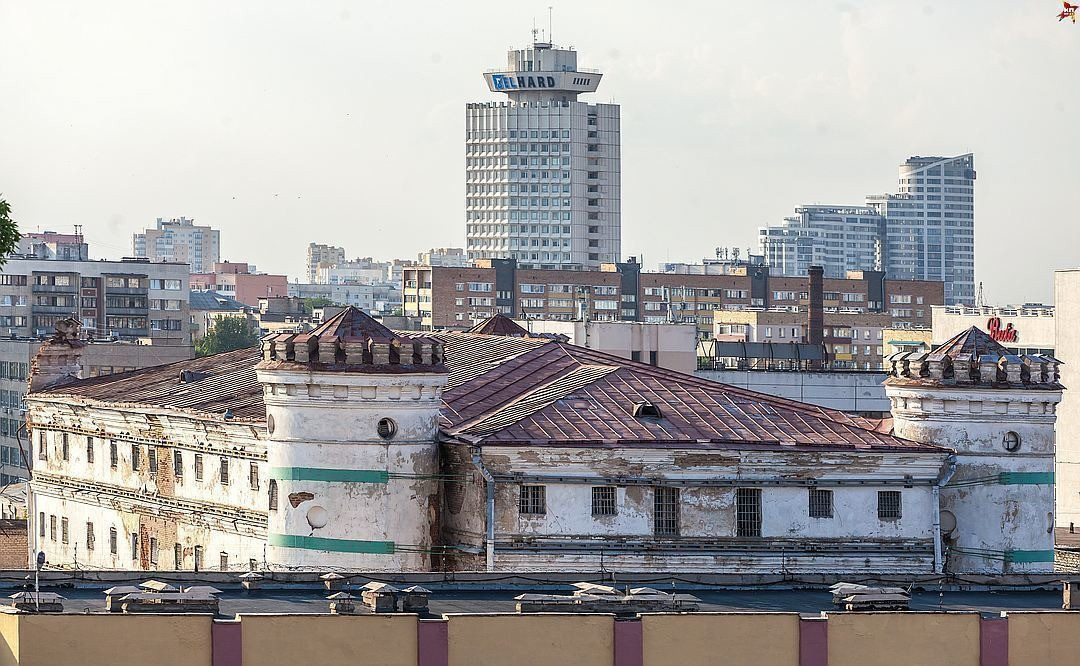
SIZO-1 on Valadarskaha Street, Minsk
Trial
Of course, a trial is stressful. Especially when you believe in justice and the decency of judges, but in reality you're nobody, and neither facts nor arguments matter. You went against the system and must be punished in any case. On top of that, I'm sitting in a cage, and my mother, my wife, my children and my friends are looking at me through the bars. Because of all this I was very nervous, lost my train of thought and said the wrong things. But I knew I had no right to let my family and loved ones see that I was frightened and broken. They had already had more than enough because of me. And if they had seen that I'd lost heart, it would have passed on to them. That was what I feared most. And it seems to me that for the most part I managed it. The trial took place over two days. After the first day the prosecutor asked for 3 years of imprisonment for me - the maximum term under Part 1 of Article 339 of the Criminal Code. Later I understood why. It seems to me the aim was to frighten me and my relatives. And they succeeded. The most terrible thing for me was not the term requested, but seeing the horror in my mother's and wife's eyes and their anguish. About 10 days passed between the first and second days of the trial. All my loved ones were on tenterhooks. The outcome - a year and a half of imprisonment.
After the trial I spent about another month at Valadarka. They began tightening the screws on the politicals even more. One evening after lights out, the food hatch opens and some con calls over the cell's senior. As it turned out later, it was Chirik, the "overseer" of Valadarka. And he gives the senior instructions: “The politicals are no friends of ours, none of your helpers should be politicals, let alone cell seniors; don't put them on the bottom tier, only the second and third”.
Clearly this was a directive from the detectives, so that not only the cops but ordinary cons too would put pressure on the politicals. But to be honest, most people thought sensibly and there were no showdowns. They saw in us not riff-raff who mug people, but people with education, strong families, flats and a decent income. Most of the inmates couldn't understand why we - with flats, income and families - went against the system. Their main motto: as long as there's a bite of lard and a shot of vodka, nothing more is needed. Only occasionally did planted provocateurs - as a rule everyone in the cell knew who they were - try to stir up some scandal on a political topic. It was hard to find the balance between putting up with the nonsense they spouted and not getting drawn into a conflict, because passions boil over quickly in there. At Valadarka back then we politicals felt comfortable. We had regular parcels, regular shop purchases, letters arrived very quickly, news from outside came in regularly, we made up 20-25% of every cell and we stuck together. But they needed to break us somehow, to create discomfort, so they started sending us off to other SIZOs.
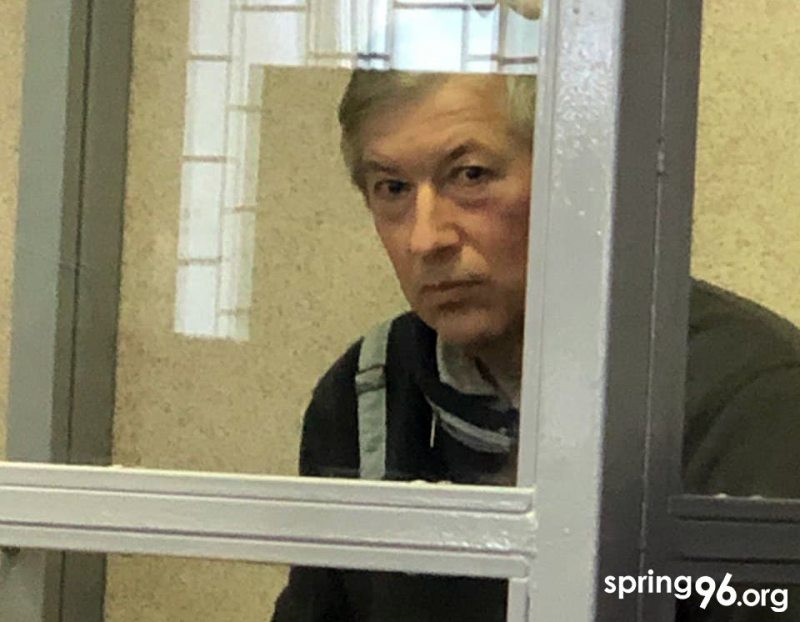
Igor Kopanaiko at his trial
Zhodzina-2
Zhodzina again. This time it was even worse. The cell I ended up in had 2 more people than beds. I changed several cells. At one point I was transferred to cell 236 on the 4th floor. I ran into a terrible problem - no water for 3-4 hours a day. Fifteen men in the cell. I raise the question with the SIZO administration. They pretend they're hearing about the problem for the first time. But the problem had existed for 2-3 years already, as experienced guys told me later. So I, as a citizen of the Russian Federation, went and wrote a letter of complaint to the Russian embassy about the lack of basic sanitary standards, saying it was a violation of human rights and asking them to come and look into it. Of course, the letter wasn't let out of the SIZO, and on the third day after that I was sent off on a transfer to Mahiliou.
Another transfer. Right after we came out, before we got into the prisoner van, they handcuffed us. That was unexpected. And only us - the politicals. Back then it was the first time:
- Why?
- You committed a crime against the Ministry of Internal Affairs.
There was an interesting moment in the Stolypin prison car. They lead me and another guy in handcuffs into a compartment of the Stolypin car. Several people are already sitting there. We get acquainted. One guy asks me:
- Grandpa, how many people have you whacked?
- I haven't whacked anyone.
He doesn't believe me. He asks:
- Then why the hell did they put handcuffs on you, an old man? Come clean, what did you do?
Everyone else has gone quiet too, listening. I tell my story, he doesn't believe me. After a while the head of the guard comes, calls everyone by surname, and everyone states their sentence and article. I state a sentence of a year and a half and the article “Hooliganism”. The guy's jaw drops - he and the others can't believe what's going on. He starts hassling the senior convoy officer:
- Why did you put handcuffs on grandpa?
The senior officer gets fed up and threatens to handcuff him too. And he says:
- I don't give a damn, go ahead. I'm ashamed that I've got 12 years and I'm riding without handcuffs, while grandpa did nothing of the sort, he's serving a year and a half, and you lawless lot have put him in bracelets.
Back then this was only just beginning, and it was all new even to the convoy. They took the handcuffs off me only when we arrived at the Mahiliou SIZO. That was about 7-8 hours later. I consider this a violation of the law and abuse of convicts. There were plenty of witnesses to this. What's more, before the transfer all politicals had their watches, disposable razors and matches taken away. And they were returned only 10-12 days later.
Mahiliou
I was in Mahiliou for about a month. Large cells. The food was better than in Zhodzina and at Valadarka. A reasonable administration, always using the polite "vy", a regime without excesses. Slightly fewer politicals, but still plenty. There I witnessed a detectives' directive concerning the politicals. A note came via the “wet” route (through the sewer pipes) saying that the politicals are no friends of ours, they must not be made cell seniors and one should keep one's distance from them. But the senior in our cell was a guy who had punched a screw in the face, and he was on the politicals' side. There were 18 people in the cell. And 3-4 of them were constantly stirring things up, egging the others on to have this guy removed as cell senior. It was very interesting to watch it all. However much they stirred, they got nowhere. From Mahiliou to Homel. Handcuffs again. They didn't take them off for about five hours. But by then I was ready for it. About two weeks in Homel, and then to the final destination, IK-2 in Babruisk. Yes, I did a fair bit of travelling.
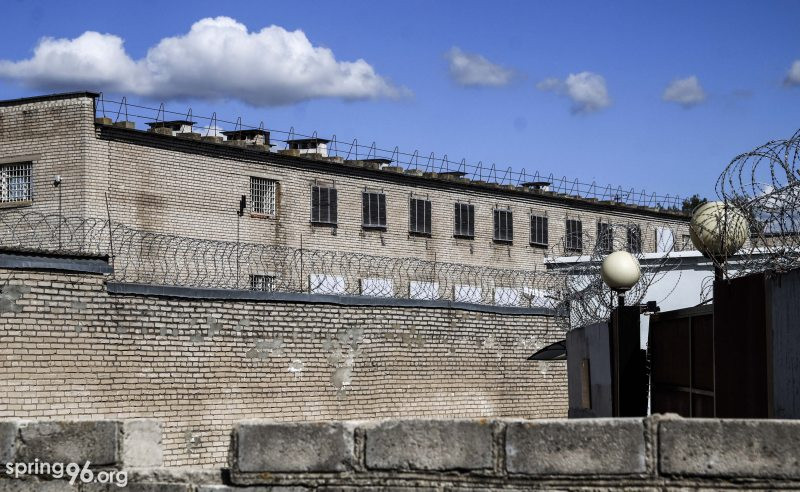
Prison No. 4, Mahiliou
Babruisk
IK-2. On the very first day the quarantine orderly provokes me into a conflict, and I fall for it. And straight away I'm off to five days in the punishment cell (ShIZO). That's the signature move of IK-2.. Before you've figured out how things work, they need to pin various violations on you. If there's nothing to find fault with, they'll make something up. For example, a "muzhik" (a regular inmate) will be sent to clean the toilets. Obviously he'll refuse. Refusing to clean means ShIZO. Then you're designated a malicious violator of the detention regime and put on some kind of preventive register. Like "prone to attacking staff" or "prone to extremism and destructive activity". And that means you have no chance of parole or of a change of regime, and only two base allowances at the prison shop. And you have to accept it as a given. It's bad if you hope you'll get away with it. Forget it and be a realist. If you, a political, don't have any penalties and aren't a malicious violator, the colony administration will be the one facing penalties.
The day after I came out of ShIZO, I was taken before a commission and put on the preventive register as prone to attacking the administration. I ask:
- On what damn…?
- Your crime showed aggression towards officers.
The system works. And unfortunately you have to be ready for it. What's more, they can write up things about you that never happened. Writing reports while you're in ShIZO is very popular - claiming that you were supposedly sleeping, lying on the bench, at a forbidden time.. That's what happened to me. That's what happened to many.
They love checking bags to see whether the items match the inventory. They checked mine 2-3 times a month. Whereas ordinary convicts may go six months without a check. For this I got my second ShIZO - 7 days. In ShIZO, for reasons I don't understand, they don't take you out for exercise. Sometimes people sit there for 30-40 days on bogus reports without going out into the fresh air. There's another popular dirty trick the administration plays on politicals. By any means it has to deprive you of a long visit with your loved ones. To find or invent some violation for which you'll be denied the visit. That's exactly what happened to me. Right before the visit an officer came and, out of the whole unit - and there were more than 100 of us - decided to check the inventory of my bag in particular…
The colony is as red as a fire engine (run by the administration through collaborating inmates), with snitches herding snitches. The food is normal. Living conditions are good. Each unit has a space for doing sports. There's a good library. The administration is on the whole reasonable, many of them young, green lads young enough to be your sons. And sometimes they try to set you on the “path of correction”. But it was plain to see that the colony paid special attention to the politicals. We slept only on the upper tier. They invented various preventive registers and extra checks for us. Only we were issued yellow tags, and we always had to stand in the front rows at any line-up. Almost none of us could get long visits. The administration put covert pressure on other convicts not to associate with us.
Almost everyone is made to work. Personally I was glad of it - it means movement. Going out, coming back, chatting there with guys from other units. Time flies. News, exchanging information. Of course, we understood that more than one pair of eyes was watching us, so we tried to keep a low profile. Everyone was divided into two main groups. One was taken out to the industrial zone, where there are many trades. They worked 6 days a week, 8 hours a day. They were paid pennies for it. At most about 250 roubles - that's in the sewing shop. And there were those who got nothing at all. The second group was taken to the UPSR (raw rubber processing section). They worked 4-5 days a week for 3-3.5 hours at a time. You had to pull the steel cord out of chunks of rubber. It took a certain skill and considerable physical effort. That's why almost all the politicals worked in this section. This wasn't paid either.
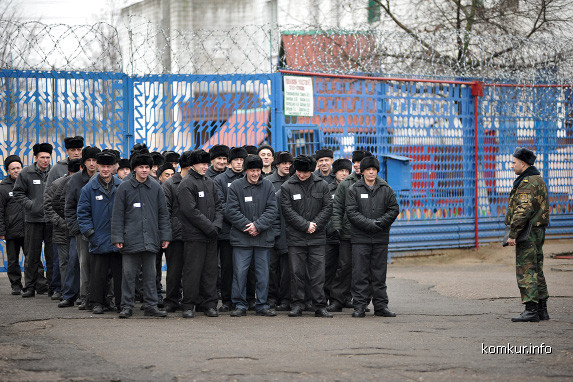 Convicts in IK-2, Babruisk
Release
The release went calmly. A search and some time, 20-30 minutes, waiting in a cage. The search of my personal belongings was very thorough, but I still managed to carry a few things out… But all my correspondence - and there was a big bag of letters from loved ones and volunteers - was taken from me and checked without me, in the next room. They turned everything over but confiscated nothing. Then I was taken to the migration department and driven to the border, from where I had to make my own way.
Igor is still in Russia, sorting out his documents.