Is today’s Belarus, with its many prisons and penal colonies, really so far removed from the concentration camps of 1940s Germany? As it turns out, it is not.
At present, Belarusian prisons and camps use a particular system of «tags» to mark prisoners according to who the repressive power structures consider them to be.
Why is the red triangle the symbol of the campaign, and how is it connected to present-day Belarus?
The system of Winkels (German Winkel — angle) was originally used in the concentration camps of Nazi Germany. Fabric triangles of different colours were usually sewn onto the left side of the chest, sometimes onto the sleeve. Above the triangle was the prisoner’s number, as well as a stripe if the person had been imprisoned more than once.
A special mark below, resembling a target, indicated membership of the so-called «penal group». This was a special group of prisoners who were held in particularly brutal conditions and did the hardest and dirtiest work. Usually given no breaks from work such as in the stone quarries, and no chance to eat, the «penal» prisoners very often died right at work or were shot by the Nazis under the pretext of attempting to escape.
The prisoner’s nationality was also marked. In that case, the first letter of the name of the prisoner’s country of origin was written inside the «Winkel» itself.
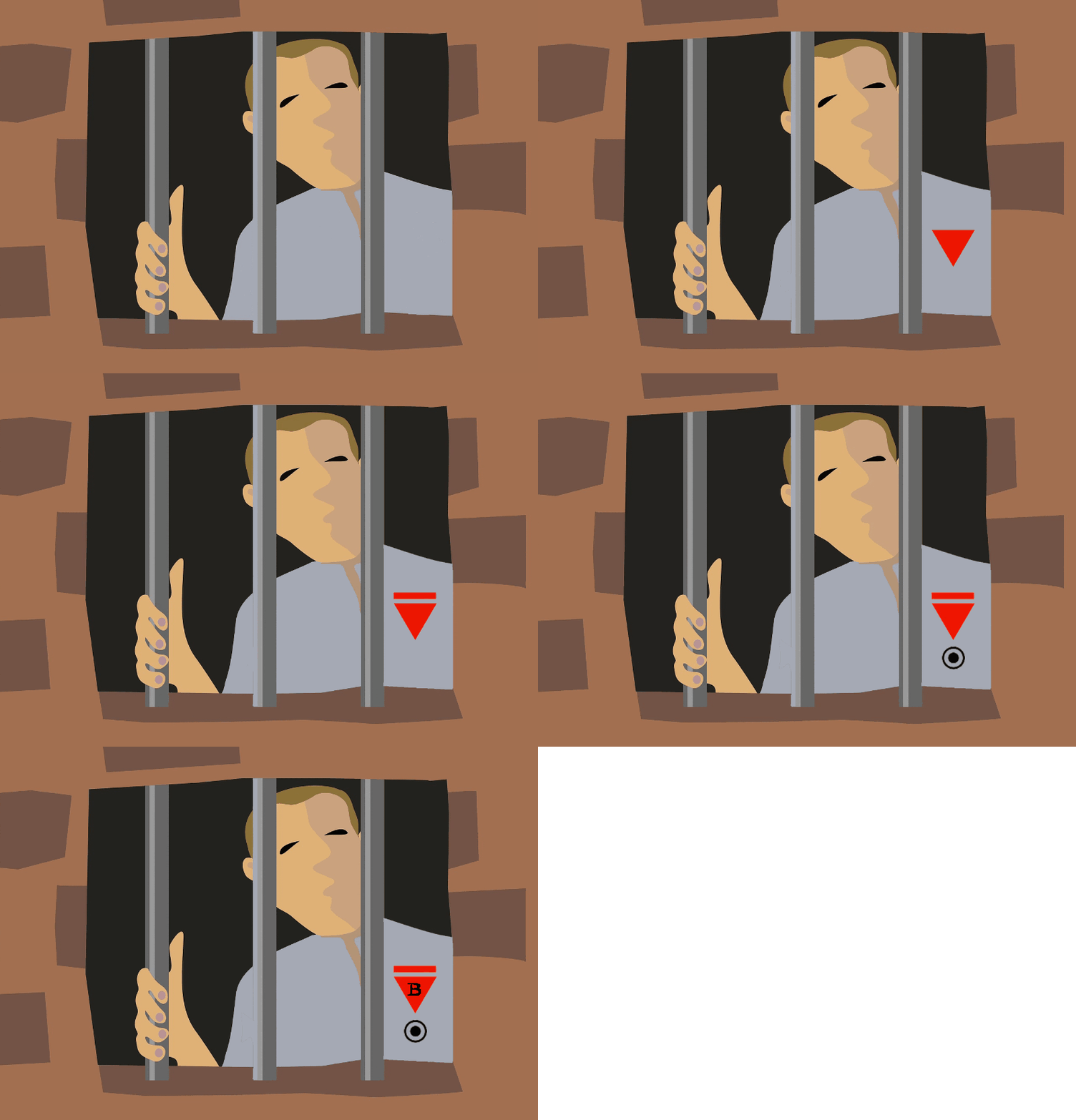
Prisoners usually had their number written on their clothing. Only in Auschwitz was it also tattooed on the body
But why go to such lengths and invent a system of separate markings for prisoners? There are several answers to this question, and they are all equally important for understanding the essence of totalitarian regimes.
First of all, it stigmatised concentration camp prisoners, singling them out among other inmates. The Nazi camp administration continued to persecute those who had already been deprived of their freedom, and applied the cruellest tortures and punishments depending on which group a person belonged to, which often led to deaths. All this also frightened other prisoners. Anyone could be tortured for associating with the «branded». The Nazis saw only the colours of the Winkels, a number that replaced a name, and special additional marks. In the camps, prisoners had no individuality, and this only completed the picture of the inhumanity of such places.
Turning to the present day and to our campaign itself, it is worth mentioning where the idea of wearing the «Winkel» came from and why now. In Belarus, trials are regularly held against members of all kinds of non-governmental organisations, parties and initiatives that take part in one way or another in the civic and political life of society. This usually involves detentions, remands in custody and even criminal cases. So a group of concerned people who attend trials to support those detained decided to launch a flash mob. They used the red triangle — the badge that marked political prisoners in the concentration camps of the Third Reich. By pinning it to their chests or sleeves, the young people showed solidarity with the defendants, thereby highlighting how the punitive practices of modern Belarus carry on those of the Nazi regime.
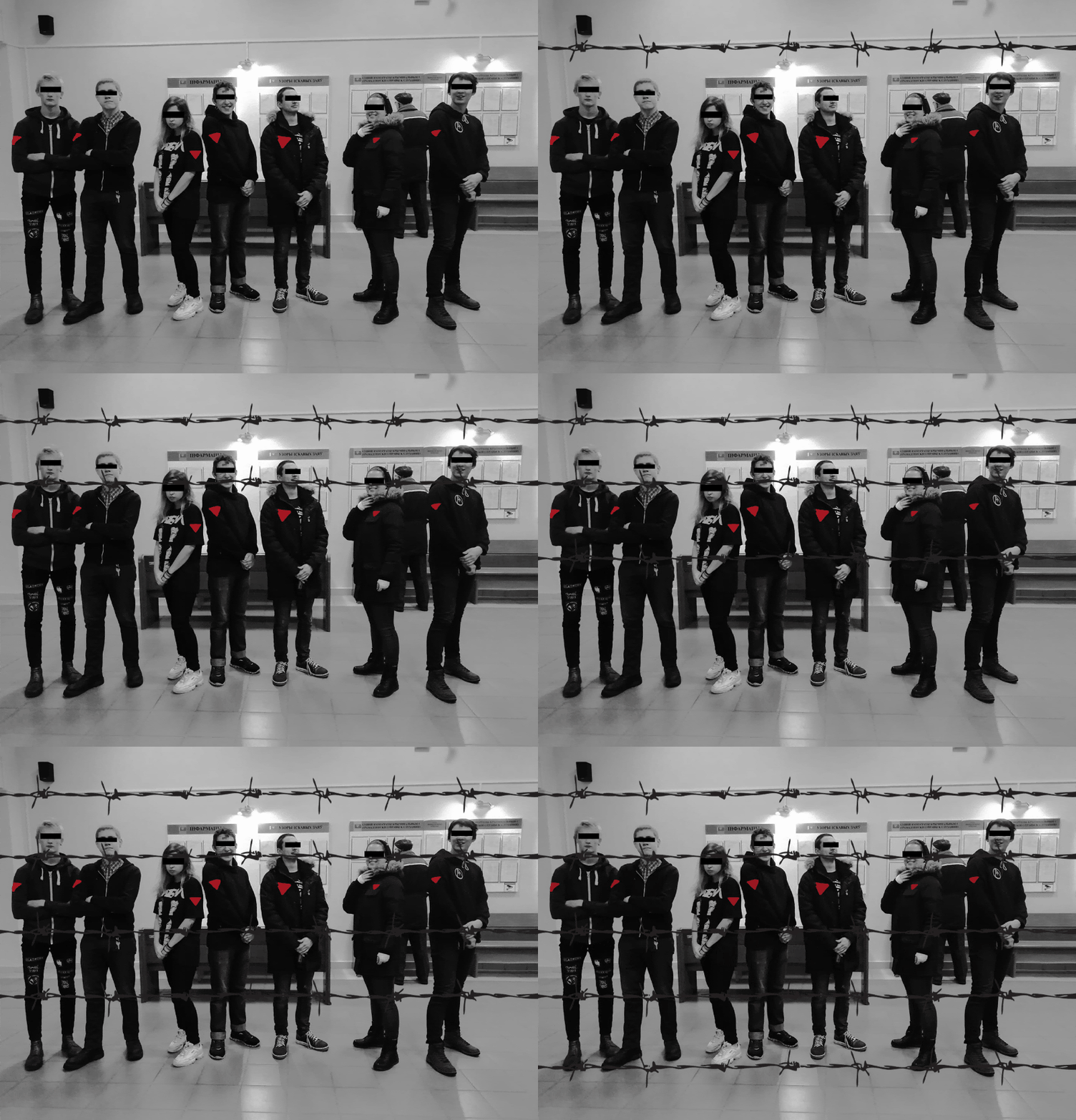
Red — political prisoners: communists, trade union members, liberals, social democrats, freemasons and anarchists
In this way they wanted to show that for a free person any state is a concentration camp, all the more so an authoritarian regime like Lukashenka’s dictatorship. And also that if society brands a person «political», this is no reason to turn away from them and deny them support. On the contrary – such people deserve to be talked about and supported for their courage in standing up for their ideals in the face of imprisonment and physical violence.
Why this particular way of supporting people persecuted for political reasons? The answer lies in our present day. That is, in the modern Belarusian penitentiary system.
Is today’s Belarus, with its many prisons and penal colonies, really so far removed from the concentration camps of 1940s Germany? As it turns out, it is not.
In the Nazi concentration camps, the special marks on prisoners also served as markers for the administration. It was the administration that decided what work to send a prisoner to, whether to beat them or not so much, to torture them or beat them to death, to shoot them on the spot or send them to the quarry. With a huge influx of prisoners of the Hitler regime, such a system made the work of physically and morally destroying «enemies of the people» easier.
More than seventy years have passed since those times, and we have returned once again to the practice of marking prisoners. At present, Belarusian prisons and camps use a particular system of «tags» to mark prisoners according to who the repressive power structures consider them to be.
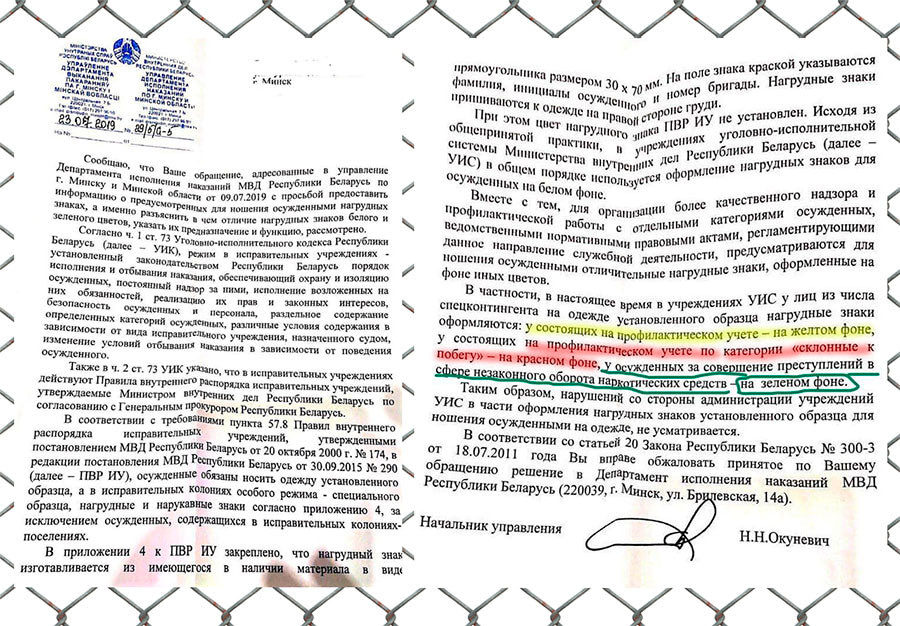
No violations by the administration regarding the design of chest badges have been found»
Thus anarchists and anti-fascists, who are persecuted by the KGB and special departments of GUBOPiK (the Main Directorate for Combating Organised Crime and Corruption), usually wear a yellow tag. Having one on their clothing means special registration and attention from the administration. People «prone to extremism» must always stand in the front rows during roll calls, may receive letters containing only everyday information, and must carry out any order of the administration; otherwise they are deprived of phone calls, visits and parcels and/or placed in a SHIZO (punishment cell).
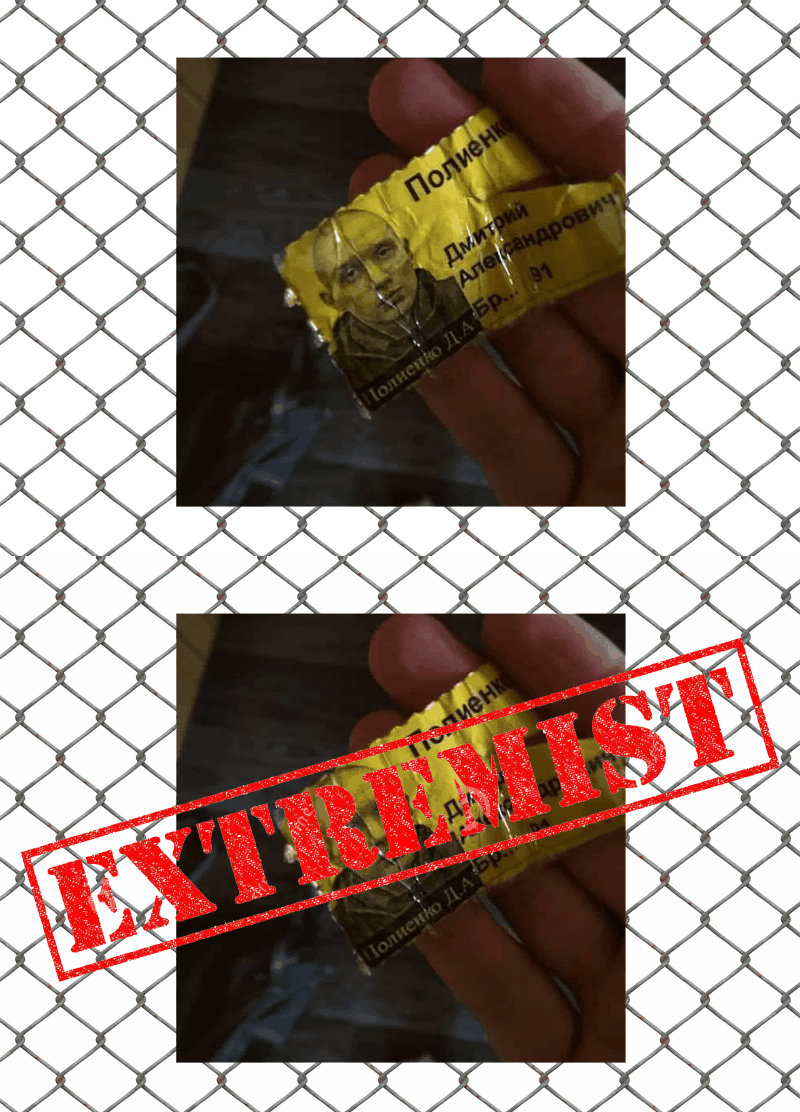
On regulation clothing, chest badges of those on the preventive register are made on a yellow background
Other marks, no less monstrous in essence, are attached to the clothing of prisoners convicted under articles related to illicit trafficking in narcotic drugs, psychotropic substances, their precursors and analogues. About 17,000 people (In 2018, 2,452 people were convicted under Articles 327–332 of the Criminal Code for drug trafficking offences; in 2017 – 2,942; in 2016 – 3,608; in 2015 – 3,929), aged between 14 and 30, are stigmatised in society no less than political dissidents and are constantly subjected to pressure, torture and restrictions during their imprisonment, with sentences averaging 7–10 years. The tag colour for prisoners convicted under the «drug» article is green.
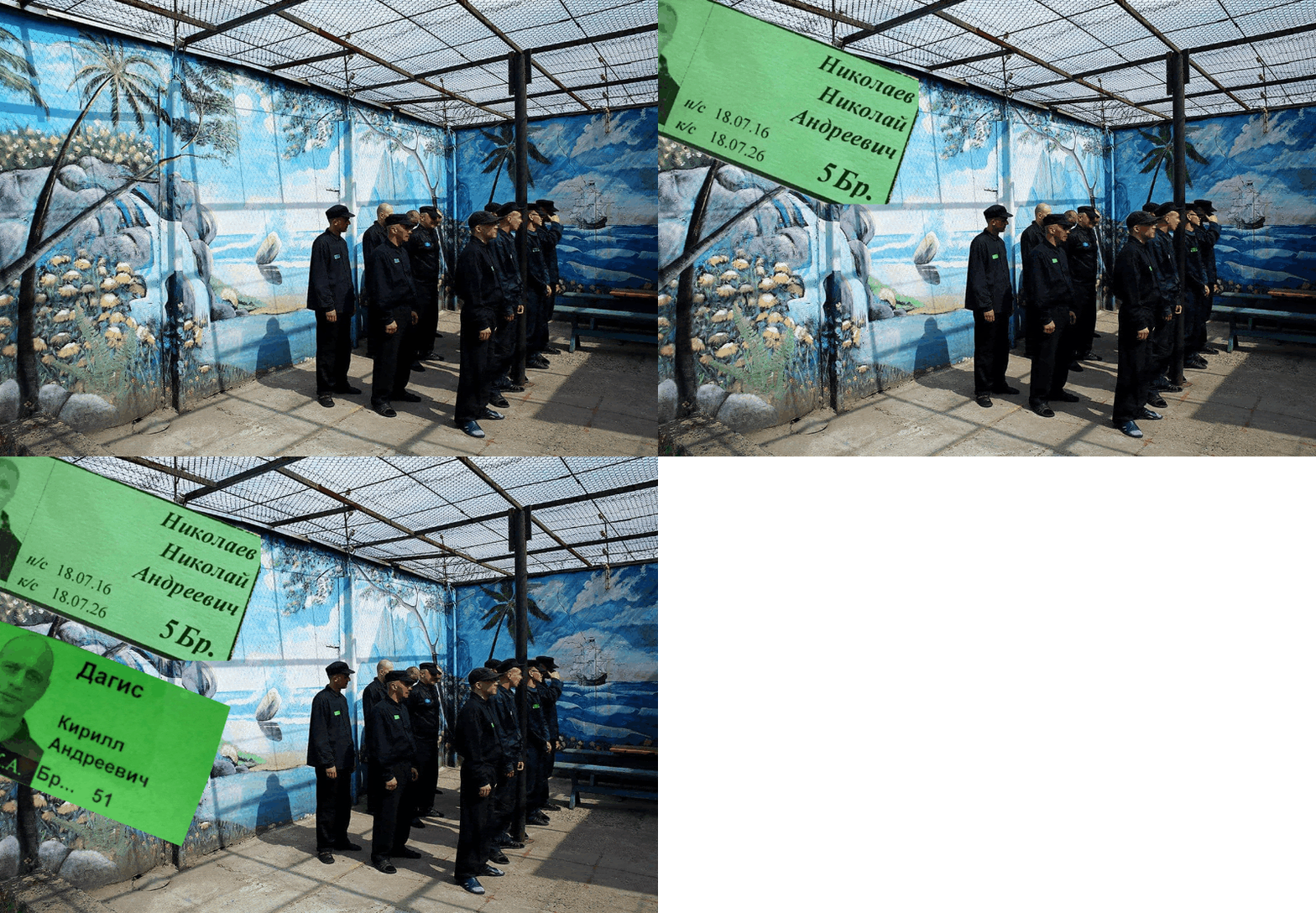
For those convicted of crimes involving illicit drug trafficking — on a green background
There are also red tags. They must be worn by persistent violators of the prison regime, repeat offenders and the so-called «especially dangerous».
The information above is only a fraction of what is really happening behind the walls of prisons and penal colonies. Dictatorship as a form of government implies that all state institutions are completely closed to monitoring by society and human rights groups.
The tag system in Belarusian prisons is an extremely alarming signal to society. Dependent courts, bloated security agencies, a minuscule share of acquittals (less than 0.2%) — all this shows that today’s «SS men», like their predecessors, cannot cope with the influx of prisoners. When the repressive machine is running at full power and the prisons are overcrowded, mere deprivation of liberty is not enough, which means a system of moral and physical suppression of dissenters is needed. The return of the tag-Winkel practice is yet another attempt by the punishers to crush any free thinking in society.
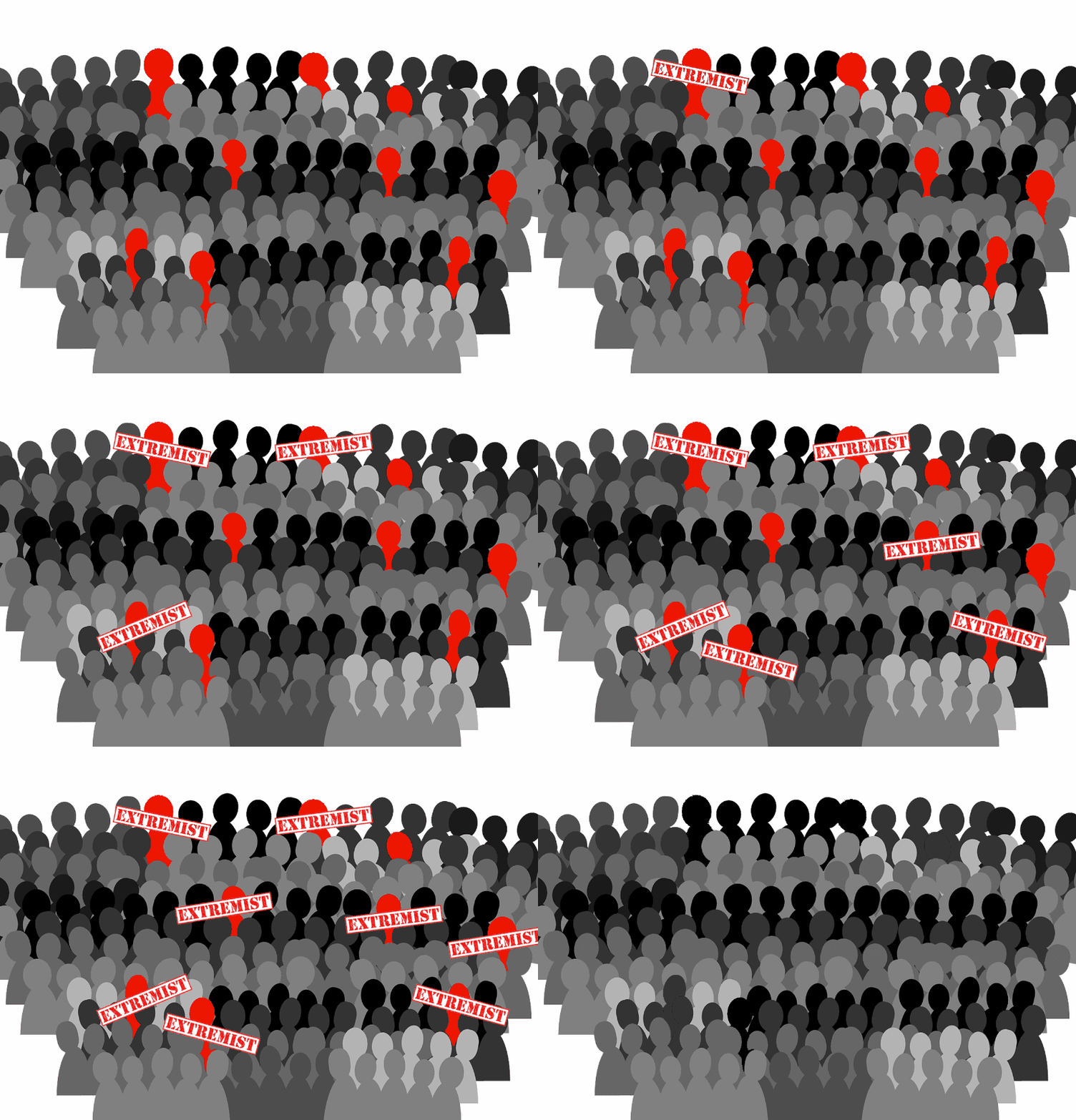
«Only he is free who can afford not to lie.» A. Camus
That is why we chose the Winkel as a symbol of solidarity and mutual aid. In opposition to the injustice of today’s institutions of control and intimidation, we invite you to be proud of those who have been caught in the millstones of the system for their convictions.
Without a diversity of opinions and positions, without arguments and debate, society faces stagnation in all spheres of life. So speak your mind boldly, be honest with your conscience and convictions, and support those deprived of their freedom for their views.
In a country ruled by injustice and police diktat, being «political» is an honour!