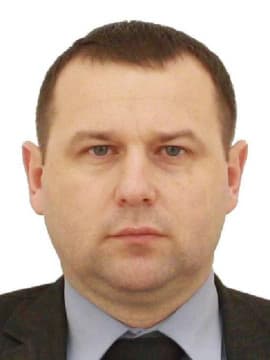
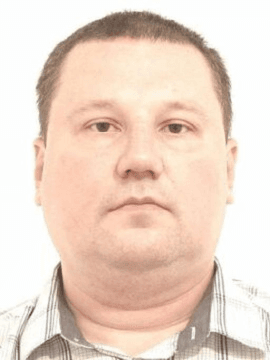
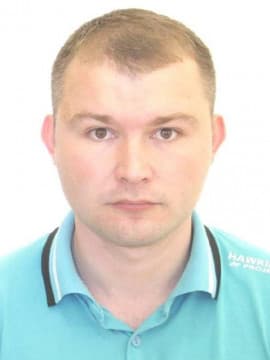
Okolotovich was arrested at a cemetery. The KGB lured the priest there by tricking him into coming there: they called him and told him a woman had died and needed a Catholic burial. At the cemetery, they handcuffed him and placed a black helmet on his head so no one could see who was being taken or where.
Two of his parishioners, a man and a woman, were detained at the same time. They spent approximately nine months in a KGB pretrial detention center, where they were forced to testify about the priest's alleged meetings with foreign diplomats.
The charges ultimately brought against Okolotovich were outlandish: he allegedly somehow diverted Russian and Belarusian air force planes in the opposite direction, thereby causing damage not only to Belarus but also to the Russian Aerospace Forces—a total of one million euros. Upon his arrest, approximately 270,000 euros were confiscated from him—mostly parish funds, not the priest's personal funds. This sum was applied toward the debt, and the remainder was claimed as additional payment in Belarusian rubles.
By that time, Okolotovich had already been under surveillance for a long time, but nothing could be found that would prove espionage.
The priest became the latest religious figure to be affected by the regime's repression of religious communities in Belarus.
Genrikh suffered a heart attack and recently underwent stomach surgery for cancer. He requires medical supervision and constant medication. He slept on the floor and boards for over a year; he was only moved to a bunk bed before the trial.
The KGB offered Okolotovych a special condition for his release. Upon returning to Volozhin, he was to invite the Vatican's apostolic nuncio to a church service and discreetly hand him a flash drive containing incriminating evidence—a pretext to discredit the diplomat. At the time, Ante Jozic was the nuncio to Belarus. This provocation against the nuncio wasn't the only one: according to Krylov, the KGB proposed similar scenarios against other foreign diplomats, primarily Polish ones. The priest refused everything: "I am completely imbued with God's ecclesiastical purposes. And what you demand of me is a crime. I cannot betray God."
In November 2025, he was pardoned after a visit to Belarus by the Prefect of the Dicastery for the Eastern Churches, Cardinal Claudio Gugerotti, as a special envoy of Pope Leo XIV.